
20 Mar Timeshare Points Systems Explained for Owners
What Are Timeshare Points Systems?
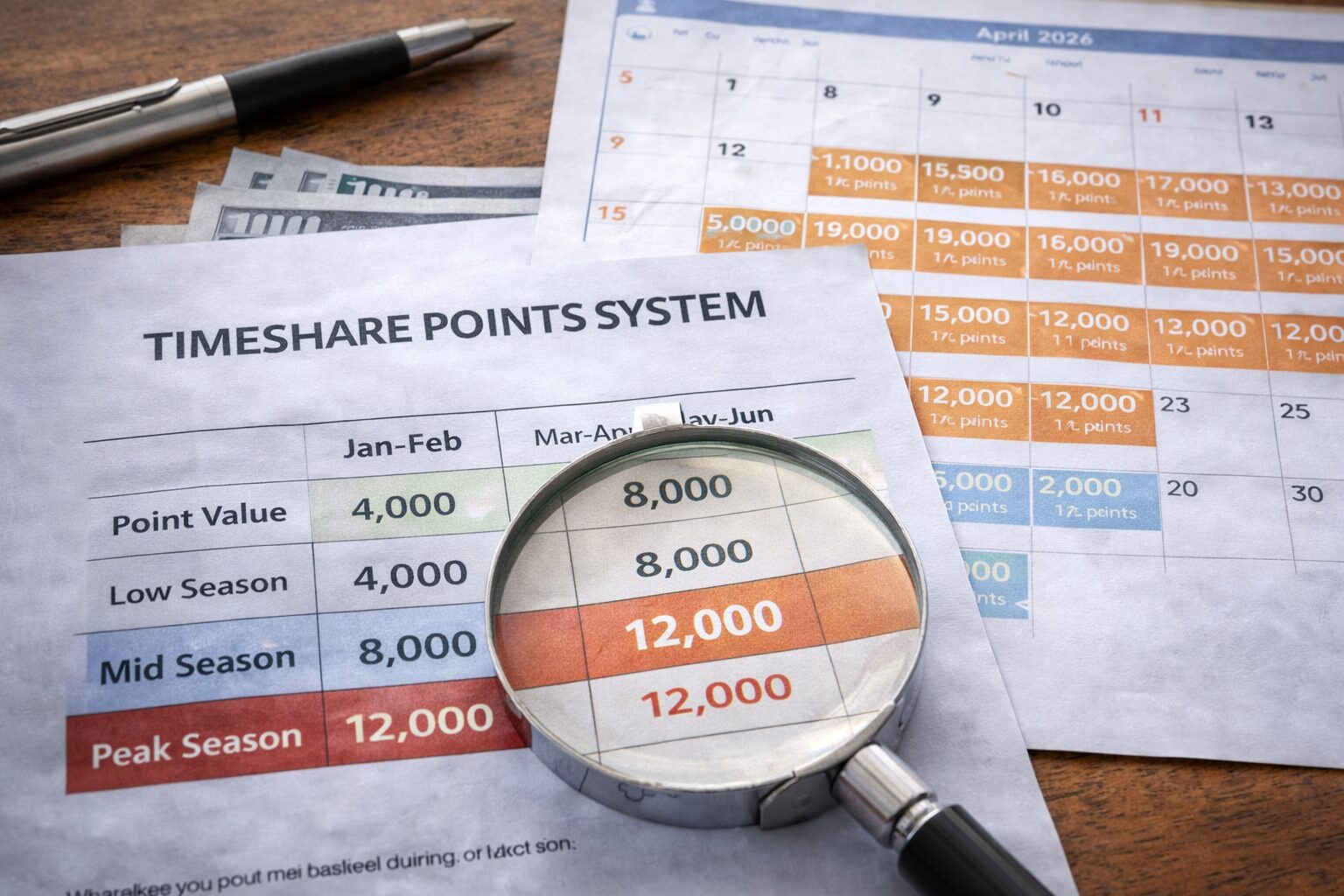
In a timeshare points systems model, ownership is based on a set number of points rather than a fixed unit and week. These points can be used to book stays at different properties within a developer’s network.
In theory, this structure allows owners to:
- Choose from multiple destinations
- Select different travel dates throughout the year
- Adjust unit sizes depending on availability
While this flexibility is often highlighted during the purchase process, actual usage depends on availability, timing, and how points are allocated within the system.
How Points Are Actually Used
Points are assigned value based on several variables. High-demand locations, larger units, and peak travel periods typically require significantly more points than off-season or smaller accommodations.
This means that even within timeshare points systems, not all bookings are equal. Owners may find that their points do not cover the types of vacations they originally expected.
Additional factors that affect point usage include:
- Reservation timing: Prime inventory is often reserved 12–13 months in advance
- Point expiration rules: Unused points may expire or require fees to roll forward
- Borrowing limits: Using future points may involve additional restrictions or costs
As a result, flexibility often depends on how early and strategically an owner plans their travel.
Why Points May Lose Practical Value Over Time
One of the most common concerns with timeshare points systems is that the practical value of points can change over time.
For example:
- The number of points required for certain bookings may increase
- Maintenance fees tied to point ownership may rise annually
- The cost per usable vacation may increase even if point totals remain the same
This can create a situation where owners pay more each year while receiving less usable value from their points.
For additional insight into ownership costs, you may also review hidden timeshare costs.
Exchange Networks and Additional Fees
Many points-based systems offer access to external exchange networks such as RCI or Interval International. While these programs expand potential travel options, they often introduce additional costs.
These may include:
- Membership fees
- Per-transaction booking fees
- Additional point conversion requirements
Consequently, using points outside the primary resort network may be more complex and expensive than expected.
Why Some Owners Feel Limited by Points Systems
Despite being marketed as flexible, timeshare points systems can create limitations when availability, cost, and timing do not align with an owner’s needs.
Common frustrations include:
- Difficulty booking desired travel dates
- Points not covering expected vacation options
- Increasing annual maintenance fees
- Limited resale or transfer opportunities
Over time, these factors can lead owners to reassess whether their timeshare continues to meet their expectations.
Do Timeshare Points Increase in Value?
Some owners report being told that their points would hold or increase in value. In practice, timeshare points do not function like traditional real estate investments.
Points generally:
- Do not appreciate in value
- Have limited resale demand
- May transfer ongoing financial obligations to future owners or heirs
Understanding this distinction is important when evaluating long-term ownership expectations.
Understanding Exit and Cancellation Options
If your experience with timeshare points systems has not matched your expectations, it may be helpful to understand the difference between timeshare exit and cancellation.
This can provide clarity when evaluating how different types of contracts are handled.
Consumer Resources for Additional Guidance
For general information about consumer contracts and financial obligations, you may also consult:
These organizations provide neutral, educational information.
Understanding Your Situation
If you want to better understand how your points-based contract works and what options may exist, reviewing your documentation is an important first step.
You may also contact us for general educational information about timeshare ownership obligations and potential next steps.
